 USGS Projects
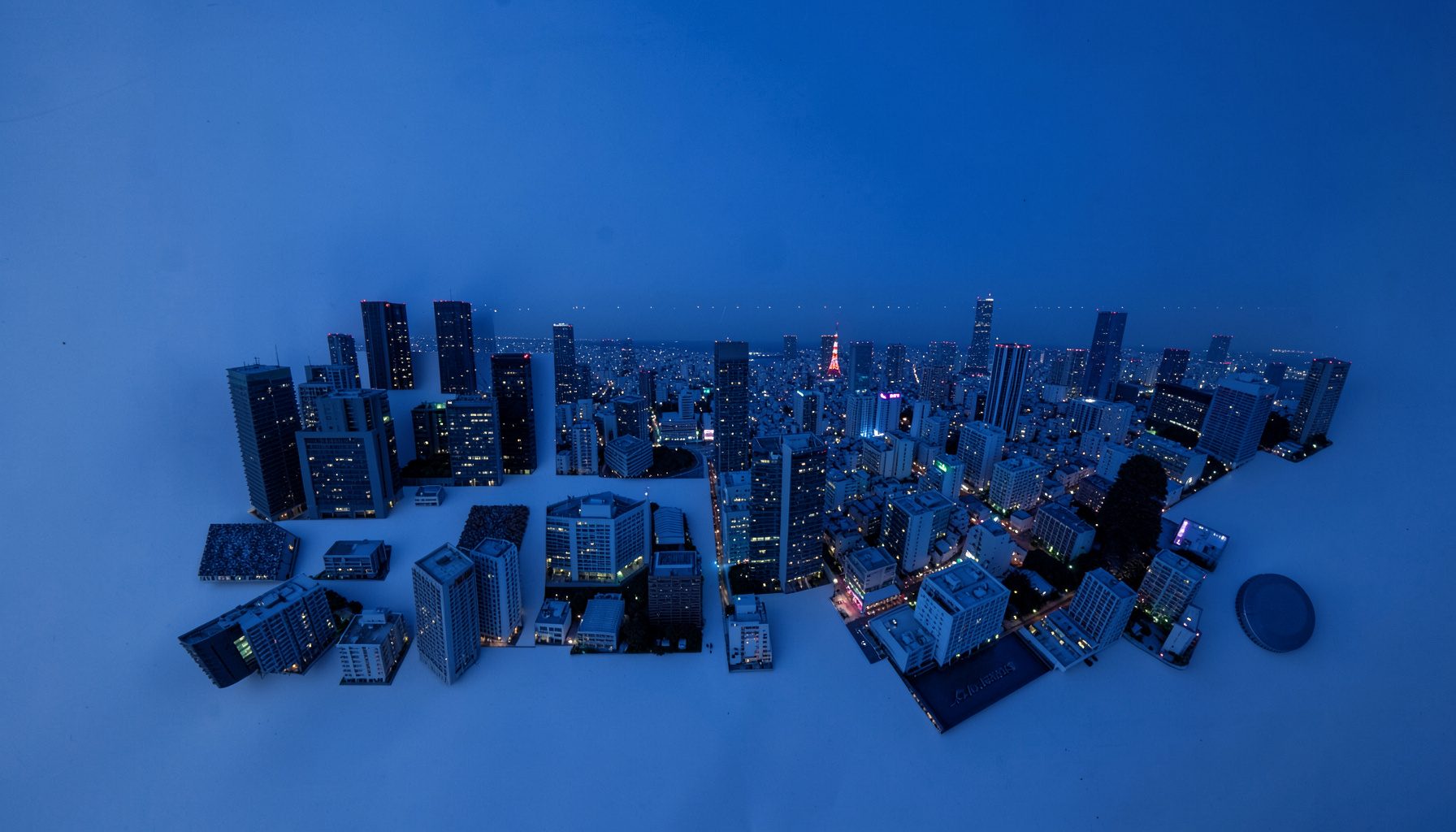
The Earthquake Threat to Tokyo
Tokyo and its outlying cities are home to one-quarter of Japan's 127 million people. Highly destructive earthquakes struck the capital in 1703, 1855, and 1923 — the last of which took 105,000 lives. Today, the population of greater Tokyo is six times larger than it was in 1923. The question driving this project is urgent: what would the consequences be if such a quake struck now?
Project Goals
The Team Tokyo project set out to assess the probability and potential impact of a large earthquake beneath the greater Tokyo metropolitan area. By combining historical seismicity records, stress-transfer modeling, and probabilistic hazard techniques, the team sought to produce actionable estimates for risk mitigation and financial planning.
The Cabinet Office of the Japanese government has considered the impact of an M=7.2 earthquake beneath Tokyo, similar to the 1855 Ansei-Edo shock. If such an event occurred during rush hour, the projected economic cost reaches approximately $1.0 trillion.
The greater Tokyo metropolitan area represents one of the most seismically vulnerable urban regions on Earth. Historical records reveal a pattern of devastating earthquakes that have reshaped the city over centuries. Researchers studying this region examine layers of geological evidence beneath the surface, looking for signs of strain accumulation along fault lines that run through heavily populated districts. Modern instrumentation now allows scientists to monitor ground deformation with remarkable precision, tracking subtle movements that might precede a major seismic event. This ongoing work helps refine probabilistic models that estimate the likelihood of future earthquakes, providing crucial information for engineers, urban planners, and emergency management authorities who must prepare for what could be an unprecedented disaster.
Understanding the potential consequences of a major Tokyo earthquake requires examining how the city has changed since its last great seismic test. The urban landscape has transformed dramatically, with taller buildings, deeper underground infrastructure, and millions more residents living in close quarters. Researchers analyze how different building types would respond to intense shaking, from traditional wooden structures in older neighborhoods to modern high-rises built with advanced engineering techniques. The region's transportation networks, utility systems, and communication lines present additional layers of complexity. Each of these interconnected systems could fail in cascading ways, amplifying the overall impact far beyond what ground shaking alone would cause.
The human dimension of earthquake risk in Tokyo cannot be separated from the geological and engineering considerations. Millions of residents navigate daily life in a city that sits atop active tectonic boundaries, yet awareness of personal preparedness varies widely across the population. Community response plans, evacuation procedures, and disaster supply networks form essential components of resilience. Social scientists work alongside seismologists to understand how information flows during crises and how people make decisions under extreme stress. The lessons learned from studying Tokyo's earthquake preparedness have relevance far beyond Japan, offering insights for other megacities facing similar seismic threats in an increasingly interconnected world.
The USGS–AFRC–Swiss Re Collaboration
This research was conducted through a collaboration between the U.S. Geological Survey, the Active Fault Research Center (AFRC), and Swiss Re. The partnership brought together expertise in crustal deformation modeling, fault-system analysis, and catastrophe risk assessment to produce a comprehensive evaluation of Tokyo's seismic vulnerability.
Project Results
Key findings from the Team Tokyo initiative advanced understanding of how stress transfer between faults influences earthquake timing and probability. The work demonstrated that interactions between seismic events can either advance or delay future ruptures on nearby faults — a factor that must be incorporated into time-dependent hazard models.
These results have implications not only for Tokyo but for urban seismic hazard assessment worldwide, particularly in regions where dense fault networks underlie major population centers.